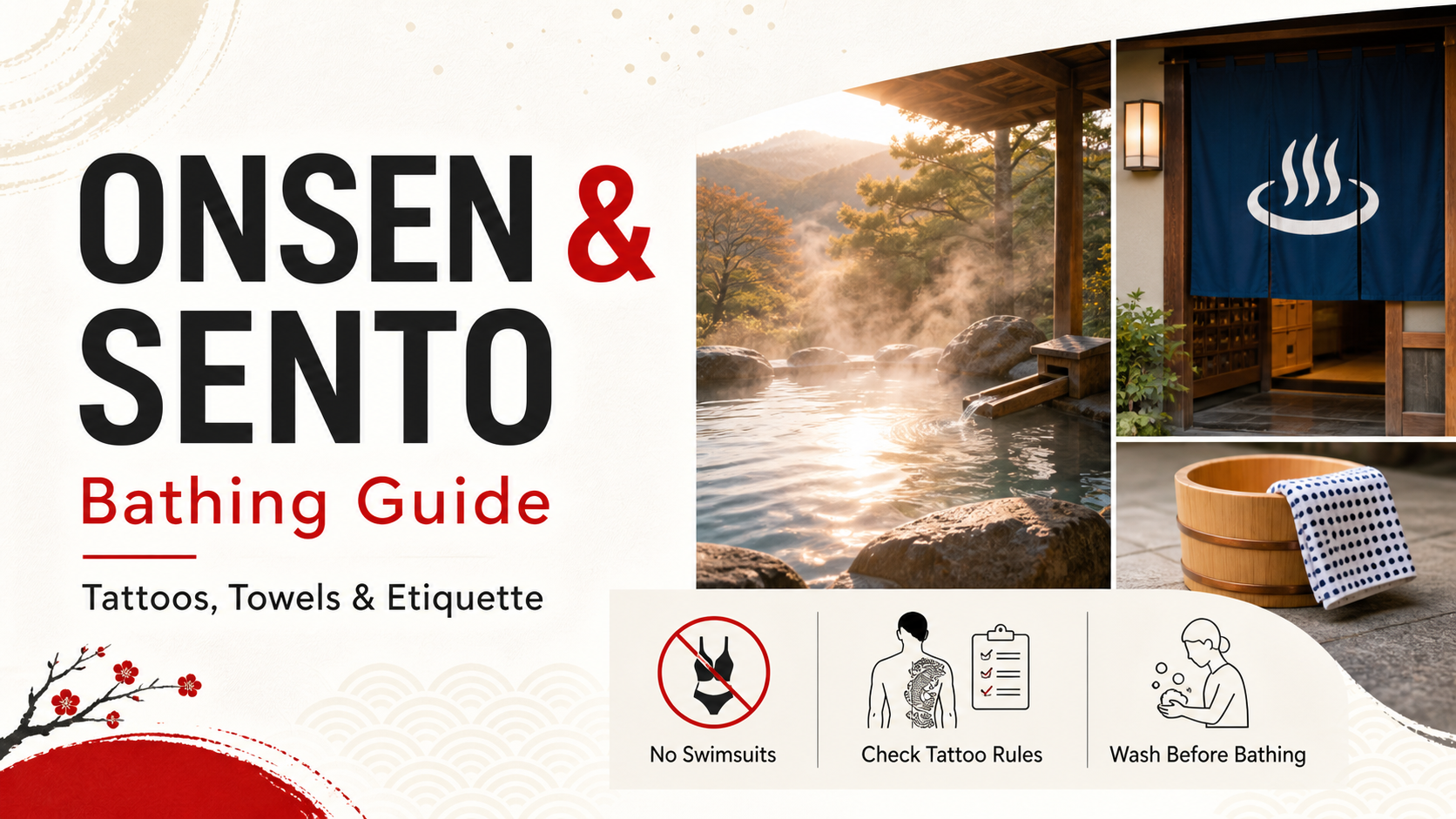
Japanese onsen and sento are relaxing, but the rules can feel confusing for first-time visitors. This guide explains what to wear, how to bathe, tattoo rules, towel etiquette, and common mistakes to avoid.
Quick Summary
- In most onsen and sento, you bathe naked — swimsuits are usually not allowed.
- Always wash your body before entering the shared bath.
- Keep towels, hair, soap, and shampoo out of the bath water.
- Tattoo rules vary, so check the facility’s policy before you go.
- Avoid phones, photos, loud talking, swimming, and drinking alcohol in the bath area.
What Are Onsen and Sento?
Japanese public baths can be confusing at first, especially if you are visiting Japan for the first time.
There are two common types of baths you may see:
Onsen are hot spring baths that use natural hot spring water. They are often found in ryokan inns, hotels, mountain towns, and famous hot spring areas.
Sento are public bathhouses, usually located in local neighborhoods. They may not use natural hot spring water, but the basic bathing manners are almost the same.
Whether you visit an onsen or a sento, the main rule is simple: Wash first, then soak.
Do You Wear Clothes or a Swimsuit?
In most traditional onsen and sento, you do not wear clothes or a swimsuit. You bathe naked.
This may feel surprising at first, but it is completely normal in Japan. Baths are usually separated by gender, and everyone follows the same rule.
Some modern spa facilities, mixed-gender baths, or resort-style bathing areas may require swimsuits. However, these are exceptions, not the standard.
If swimwear is allowed or required, the facility will usually say so clearly.
💡JAPAN HACK
Before entering, check for signs such as:
- “No swimwear”
- “Please bathe naked”
- “Swimsuit required”
- “Men / Women”
- “Private bath”
If you are not sure, ask the staff:
“Do I need to be naked?”
It sounds direct, but it is a normal question for international visitors.
What Towels Do You Need?
Most Japanese bath facilities use two towels:
Small towel:
Used for washing your body and for modesty while walking around.
Large towel:
Used to dry your body after bathing.
The most important towel rule is:
Do not put your towel into the bath water.
You can leave your small towel at the side of the bath, fold it and place it on your head, or keep it nearby outside the water.
The large towel usually stays in the changing room and is used after bathing.
Some facilities provide towels for free. Others rent or sell them at the front desk. Small local sento may expect you to bring your own towel.
Step-by-Step: How to Use a Japanese Bath
Many bathhouses have shoe lockers near the entrance. Remove your shoes before entering the main area.
At a sento, you usually pay at the front desk or ticket machine. At a hotel or ryokan onsen, bathing may be included in your stay.
Look for gender signs.
男 / Men
女 / Women
Some facilities also use blue for men and red or pink for women, but always check the signs carefully.
Put your clothes, phone, wallet, and large towel in a locker or basket. Bring only your small towel and toiletries into the bathing area.
This is the most important step. Sit at a shower station. Rinse your body, wash with soap, shampoo your hair if needed, and rinse everything off completely. The shared bath is for soaking, not for washing.
Japanese baths can be very hot. Enter slowly and let your body adjust to the temperature. Do not jump in, splash, or swim.
Onsen and sento are places to relax. Quiet conversation is usually okay, but loud talking can disturb others.
Before going back to the changing area, wipe off excess water with your small towel. This keeps the changing room floor clean and dry.
Are Tattoos Allowed in Onsen and Sento?
Tattoo rules depend on the facility.
Some onsen and sento allow tattoos.
Some allow them only if they are covered.
Some do not allow visible tattoos at all.
This rule exists because tattoos have historically been associated with organized crime in Japan. However, many facilities are becoming more flexible, especially in tourist areas.
If you have tattoos, check the facility’s official website before you go.
You can also ask:
“Are tattoos allowed?”
In Japanese:
“Tattoo wa daijoubu desu ka?”
タトゥーは大丈夫ですか?
If your tattoo is small, you can ask:
“Can I cover it with a sticker?”
シールで隠せば大丈夫ですか?
Another good option is to book a private bath.
Private baths are often called:
- Private bath
- Family bath
- Kashikiri-buro
- Kazoku-buro
They are useful if you have tattoos, feel nervous about bathing naked with strangers, or want to enjoy the bath with your partner or family.
Common NG Actions in Japanese Baths
Avoid these mistakes and you will be fine.
Entering the bath without washing first
Always wash your body before soaking.
Putting your towel in the water
Your towel should not touch the shared bath water.
Using soap in the bath
Use soap, shampoo, and conditioner only at the shower station.
Taking photos
Phones and cameras are usually not allowed in the bathing area or changing room.
Swimming or splashing
Even if the bath is large, it is not a swimming pool.
Letting your hair enter the water
If you have long hair, tie it up before entering the bath.
Talking too loudly
Quiet conversation is okay in some places, but loud voices can ruin the relaxing atmosphere.
Bathing after drinking too much alcohol
Hot baths can make you feel dizzy, especially after alcohol. Drink water and be careful.
What Should You Bring?
For a smooth visit, bring:
- Small towel
- Large towel
- Hair tie, if you have long hair
- Body soap and shampoo, if not provided
- Coins for lockers or vending machines
- Tattoo cover stickers, if needed
- Water bottle for after bathing
Many tourist-friendly onsen and hotels provide towels and toiletries. Local sento may be simpler, so bringing your own towel is a safe choice.
Final Thoughts
Japanese onsen and sento may feel intimidating at first, but the basic rules are simple.
Wash before entering the bath.
Do not wear a swimsuit unless the facility says so.
Keep towels, hair, and soap out of the water.
Check tattoo rules before you go.
Respect the quiet, shared space.
Once you understand these basics, Japanese baths become one of the most relaxing experiences you can have in Japan.
- Can I wear a swimsuit in Japanese onsen?
Usually, no. Most traditional onsen and sento require guests to bathe naked. Some modern spa facilities have swimsuit areas, but they are exceptions.
- Are Japanese baths separated by gender?
Usually, yes. Most onsen and sento have separate bathing areas for men and women. Some mixed-gender baths exist, but they are less common and may have special rules.
- Do I need to wash before entering the bath?
Yes. Always wash and rinse your body before entering the shared bath.
- Can I put my towel in the bath?
No. Keep your towel out of the bath water.
- Are tattoos illegal in Japan?
No. Tattoos are not illegal in Japan. However, some bath facilities have their own rules against visible tattoos.
- Can I bring my phone into the bath area?
No. Phones and cameras are generally not allowed because people are bathing naked.
- What if I accidentally break a rule?
Do not panic. Apologize politely and correct it. You can say:
“Sumimasen.”
すみません。
It means “Sorry” or “Excuse me.”
Official Sources
- Japan National Tourism Organization (JNTO) : A Beginner’s Guide to Onsen
- Tokyo Sento Association: How to Enjoy Sento
- Tokyo Sento Guide Book PDF
- Kinosaki Onsen: Tattoo Friendly Onsen
- Oita Tourism: Japanese Onsen: A Traveler’s Guide